Reflect – Assess – Practice*3
A Framework for Lasting Leadership Growth
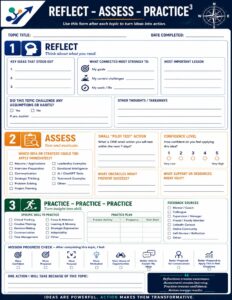
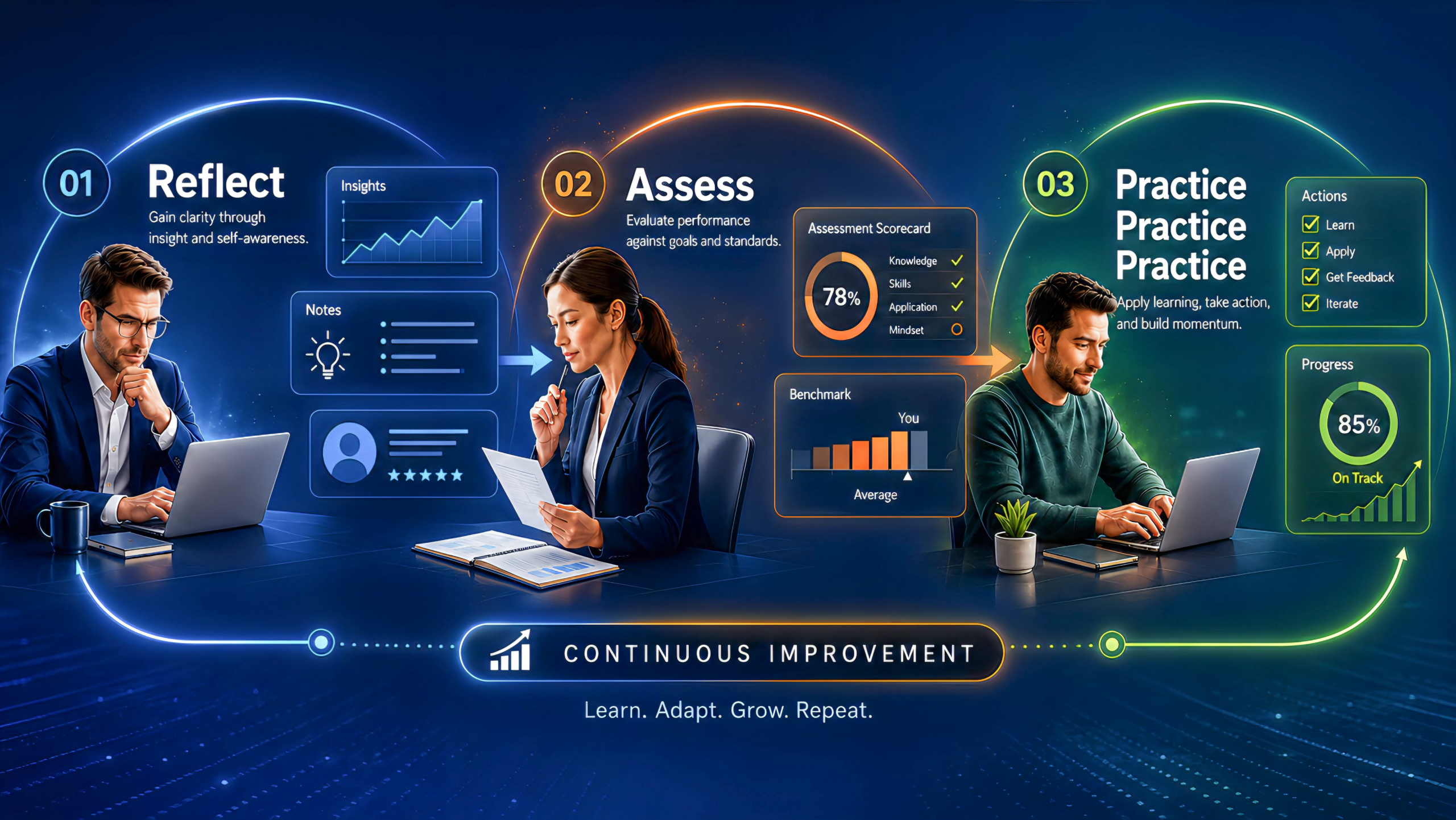
When it comes to leadership, management, and communication, the hardest part isn’t finding new ideas. It’s making them stick. Most of us see dozens of tips daily, on LinkedIn or Instagram. And we read books, attend workshops, or hear tips in passing. But the insights fade before they have a chance to shape our behavior. To break that cycle, you need a framework that turns ideas into habits. That’s where the Reflect–Assess–Practice Model comes in.
1. Reflect: Think Before You Act
Every new technique, whether it’s a tip for clearer communication, a strategy for managing conflict, or a tool for building emotional intelligence, begins with reflection. Ask yourself:
- What does this mean for me and my role?
- How does this connect to challenges I’m facing right now?
- Where have I seen this succeed—or fail—before?
Reflection is about pausing long enough to understand why this idea matters. Without this step, techniques stay theoretical. With it, they start to feel personally relevant and worth trying.
2. Assess: Test and Sample
Once you’ve reflected, don’t jump straight to mastery. Instead, assess the idea by trying it in a small, low-stakes way. Think of it as a “pilot project” for yourself. For example:
- Use a new questioning technique in one meeting.
- Try an active listening strategy in a single conversation.
- Apply a stress-management exercise at the start of your day.
The goal here isn’t perfection. It’s gathering data. What worked? What felt awkward? What feedback, verbal or non-verbal, did you notice? Assessment helps you separate the “good on paper” from the “good in practice.”
3. Practice – Practice – Practice: Build Lasting Skill
The final step is the most important: deliberate practice. Real growth doesn’t come from trying something once; it comes from repeating it intentionally until it becomes second nature.
“Don’t only practice your art, but force your way into its secrets; it deserves that, for only art and science can exalt man to divinity.”
— Ludwig van Beethoven
As Beethoven reminds us, practice is about more than repetition. It’s about digging into the deeper secrets of a skill until it becomes part of who you are.
“Success has to do with deliberate practice. Practice must be focused, determined, and in an environment where there’s feedback.”
— Malcolm Gladwell
Gladwell’s insight reinforces the point: practice isn’t just about time spent. It’s about how intentionally and purposefully you practice.
Deliberate practice means:
- Setting aside time to use the skill consistently.
- Seeking feedback from colleagues, mentors, or even self-reflection.
- Adjusting and refining each attempt rather than just going through the motions.
This stage is where learning transforms into mastery. Practice becomes the bridge between knowing and becoming.
Why This Model Works
The Reflect–Assess–Practice framework mirrors how we learn best as humans:
- Reflection creates meaning.
- Assessment reduces risk and builds confidence.
- Deliberate practice creates lasting habits.
Whether you’re learning how to lead with empathy, sharpen your communication, or strengthen your management skills, this three-step process ensures you don’t just collect tips, you integrate them into who you are as a leader.
The following form can be downloaded from findingthefuturefaster.ai.